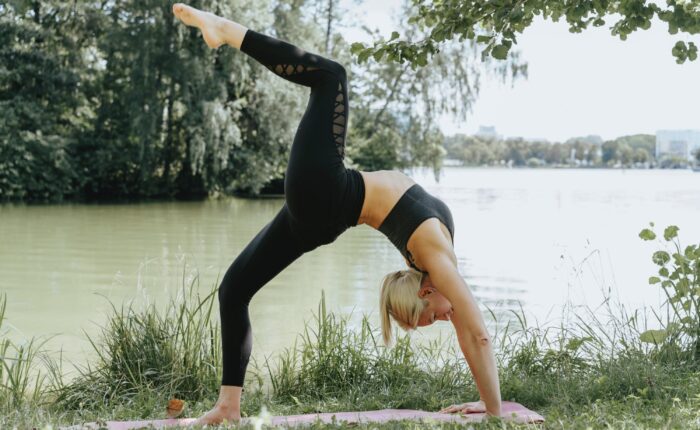

Stretching is important to reduce muscle tightness which limits the range of motion (ROM) and may create a muscle imbalance. Depending on what you want to achieve with the stretch, different types of stretches can be more beneficial than other. For example, using static stretches can decrease strength and force production because of deactivation of the muscle, but increase ROM especially during rehabilitation.
Different stretching methods:
Whereas dynamic stretches are movement-based and in full range of motion, static stretches require retaining a position. Ballistic stretching is also dynamic, but in a bouncing effect and not in a controlled action. There are also PNF (proprioceptive neuromuscular facilitation) stretching which works on a stretch, contract, stretch system. This activates the Golgi tendon within joint to allow the muscle to fully relax and fully stretch. The final two stretches include active and passive stretching. While the opposite muscle group contracts during active stretching, an external force is provided during passive stretching.
When we look at the effectiveness of stretching before your workout, the intensity and duration is important. It appears that holding the stretch for longer than 60 seconds will have a greater decrease on performance than holding it for less than 60 seconds. In terms of ROM, static stretching has an insignificant benefit for ROM. In contrast to static stretching, dynamic stretching improves power including jumping and running performance.
In conclusion, static stretching prior to your workout has a decrease on performance, but in the longer term it will have an increase in ROM. Dynamic or PNF stretching before workouts will have a better effect on force production and increase performance in shorter term. After workouts, stretching with a lower intensity and duration will reduce muscle injuries and increase ROM with insignificant effects on performance.