
Hip bursitis is when the bursa in the hip becomes inflamed. A bursa is the closed fluid-filled sac that operates as a gliding surface to reduce the friction between tissues in the body. There are two major bursae in the hip present, the trochanteric bursa and the ischial bursa.

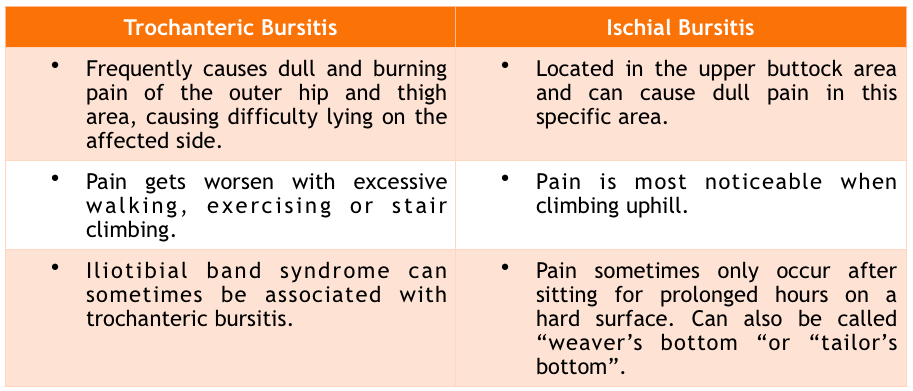
They cause two types of bursitis namely trochanteric bursitis and ischial bursitis. These two bursae are located on the edges of the femur and pelvic bone. Inflammation of both can be associated with tightness and pain around the hip area. Hip bursitis is one of the most common causes of hip pain.
See table below for signs and symptoms of the two types of bursitis:
Risk factors can include some of the following:
The treatment for hip bursitis will depend on whether it involves infection or not. Hip bursitis is commonly a noninfectious condition. It can be caused by inflammation that results from local soft-tissue trauma or injury.
Noninfectious bursitis includes compress, rest, ice and anti-inflammatory medication for pain. Occasionally hip bursitis requires aspiration of the bursa fluid. This will include removal of the fluid with a needle and syringe under sterile conditions. This procedure can be performed in the doctor’s room. Noninfectious bursitis can also be treated with a cortisone injection into the swollen bursa. Recovery time after the injection is usually within days.
Infectious (septic) bursitis will require further evaluation and treatment by the doctor. This type of bursitis is uncommon but can occur. They will examine the fluid in a laboratory to precisely identify which bacteria is causing infection. It is treated with antibiotics, surgical drainage and removal of infected bursa sac may be necessary.
Patients with hip bursitis can often benefit by the following:
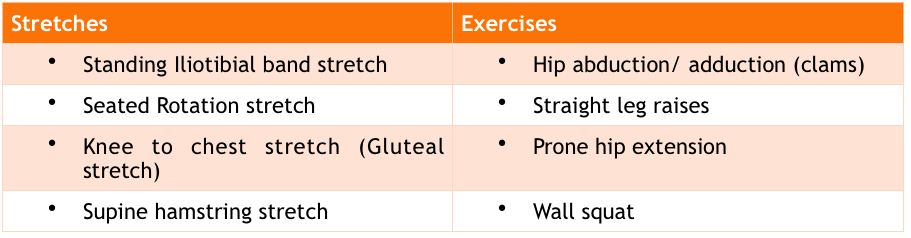
In most cases hip bursitis responds completely with treatment. Having a physical therapy program guided by a physical therapist can be helpful. Treatment from a physical therapist can expedite recovery in resistant hip bursitis. Bursitis in the hip can often be prevented by stretching prior to your exercise session and wearing the correct footwear for certain activities. Strengthening of the muscles that supports the hip will help to keep the hip joint more stable. Keeping these specific muscles strong can relieve pain and prevent further injury.
Please see table below for a few stretches and exercise: