Brachial neuritis is a type of peripheral neuropathy that affects the hand, shoulder, chest and arm. It can be characterized by sharp, severe pain in the nerves of the brachial plexus, that’s followed by weakness and numbness. Brachial neuritis is a form of peripheral neuropathy. It is characterized by pain or loss of function in the nerves that send signals to and from the brain and the spinal cord to the rest of the body. Brachial neuritis goes away on its own after a few months. It can also be referred to as brachial neuropathy or brachial plexus injury. When acute neuritis occurs, damage to the brachial nerves comes suddenly and unexpectedly. It can be unrelated to any other injury. This can also be called Parsonage-Turner syndrome or neuralgic amyotrophy.
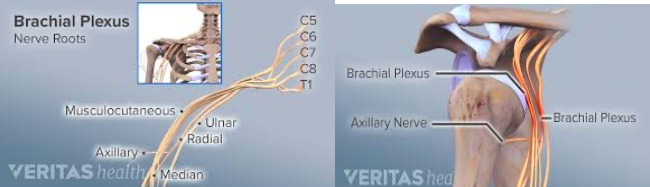
When the brachial nerve gets inflamed it can cause severe pain, initial focus will then be put on reducing the pain. They can test for brachial neuritis with EMG or a nerve conduction study. It mainly affects the lower nerves of the brachial plexus in the hand and arm. It usually affects only one side of the body, but can also involve other nerves and parts of the body.
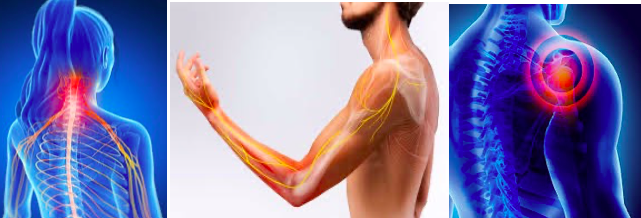
Symptoms for brachial neuritis that can occur:
• Severe pain in upper arm and shoulder
• Pain affecting one side of the body
• After a few days pain transitions to weakness, limpness or paralysis in the affected area
• Lack of muscle control in affected area (arm or shoulder)
• Lack of sensation or feeling in affected area (arm or shoulder)
Treatment will focus on managing pain and weakness until the symptoms improve and go away. Some may include the following:
• NSAID’s such as ibuprofen
• Physical therapy
• Transcutaneous electrical nerve stimulation (TENS), where nerves will be stimulated to reduce pain
• Cold therapy
• Lifestyle changes such as regular exercise and relaxation including yoga

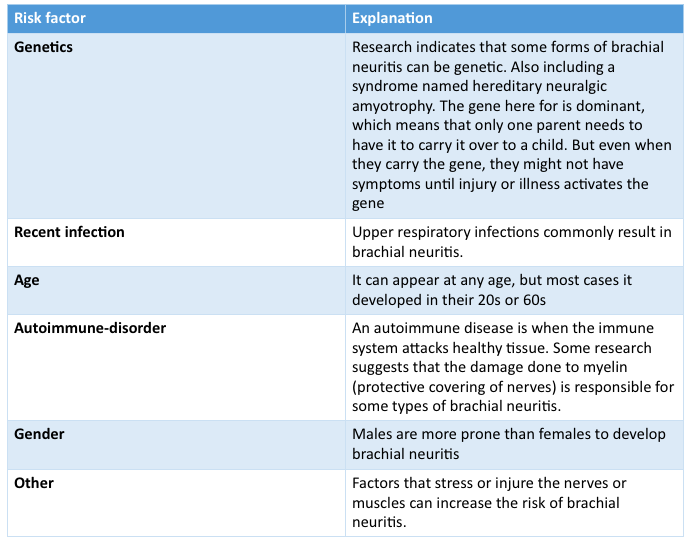
Risk factors for brachial neuritis can include: