

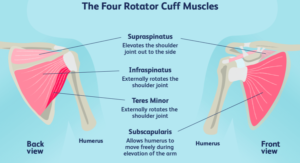
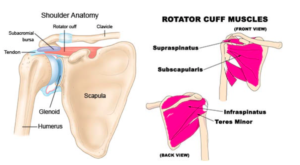
The rotator cuff is an amalgamation of four separate muscles consisting out of the supraspinatus, infraspinatus, teres minor and subscapularis muscles. They form a group of muscles and tendons surrounding the entire shoulder. They are responsible for movement and stabilizing of the shoulder. Without the rotator cuff muscles all other movements will be impossible or painful.
When injuring your rotator cuff muscles pain will most likely be felt over the entire shoulder. It can also spread to the elbow in some cases. See below some symptoms indicating a Rotator cuff injury:
• Sudden tearing sensation
• Acute pain or a dull ache deep inside the shoulder joint
• Inability to raise the arm, even above shoulder height
• Increasing weakness
• Tenderness around the shoulder
• Shakiness in the entire arm
• Slight hemorrhage
• Disturb sleep, especially if you lie on the affected side
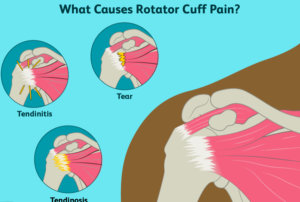
Rotator cuff injuries start when people repeat overhead motions in their jobs or sporting activities. The risk for this type of an injury increases with age. A lot of people recover from this injury through physical therapy exercises that increases their flexibility and strength of all the muscles around the shoulder.
There are a few risk factors increasing your chances to get a rotator cuff injury:
Age: As age increase and an individual gets older, the chances of getting an injury increases as well. It’s most common at the age of 40
Certain sports: Athletes that make use of repetitive overhead arm motions are most likely to get a rotator cuff injury. This include archers and tennis players.
Construction jobs: Careers such as painters and carpenters require repetitive arm movements and sometimes make use of overhead movements. Those movements can damage the rotator cuff muscles over a period of time.
Family history: There can be a genetic component involved related to rotator cuff injuries. They can appear more commonly in certain families.
There are also a few complications going with a rotator cuff injury. Without treatment the injury can lead to more permanent loss of motion or weakness. It can result in progressive degeneration of the shoulder. It’s good to rest the shoulder but keeping it for too long immobilized can result in frozen shoulder. Which causes the connective tissue to become thickened and tight.
When you had a previous rotator cuff injury or at risk for one it is always good to have a plan to prevent it from happening again. Daily stretches and strengthening exercises for the muscles and shoulder joint is necessary to prevent injury. It is equally important to strengthen the front and back muscles together, including the chest and upper arm. It’s also important to strengthen the muscles around the shoulder blade to optimize shoulder muscle balance.
Conservative treatment can include rest, ice and physical treatment. When the injury is more severe it might involve surgery. Physical therapy can usually be one of the first treatments that the doctor will suggest. Specific exercises for the location of your rotator cuff injury can help to improve and restore your strength and flexibility.
By doing your daily stretches and exercises you can decrease the chance of getting a rotator cuff injury. Always make sure that you train all the muscles around the shoulder joint and don’t favor certain muscles.

